
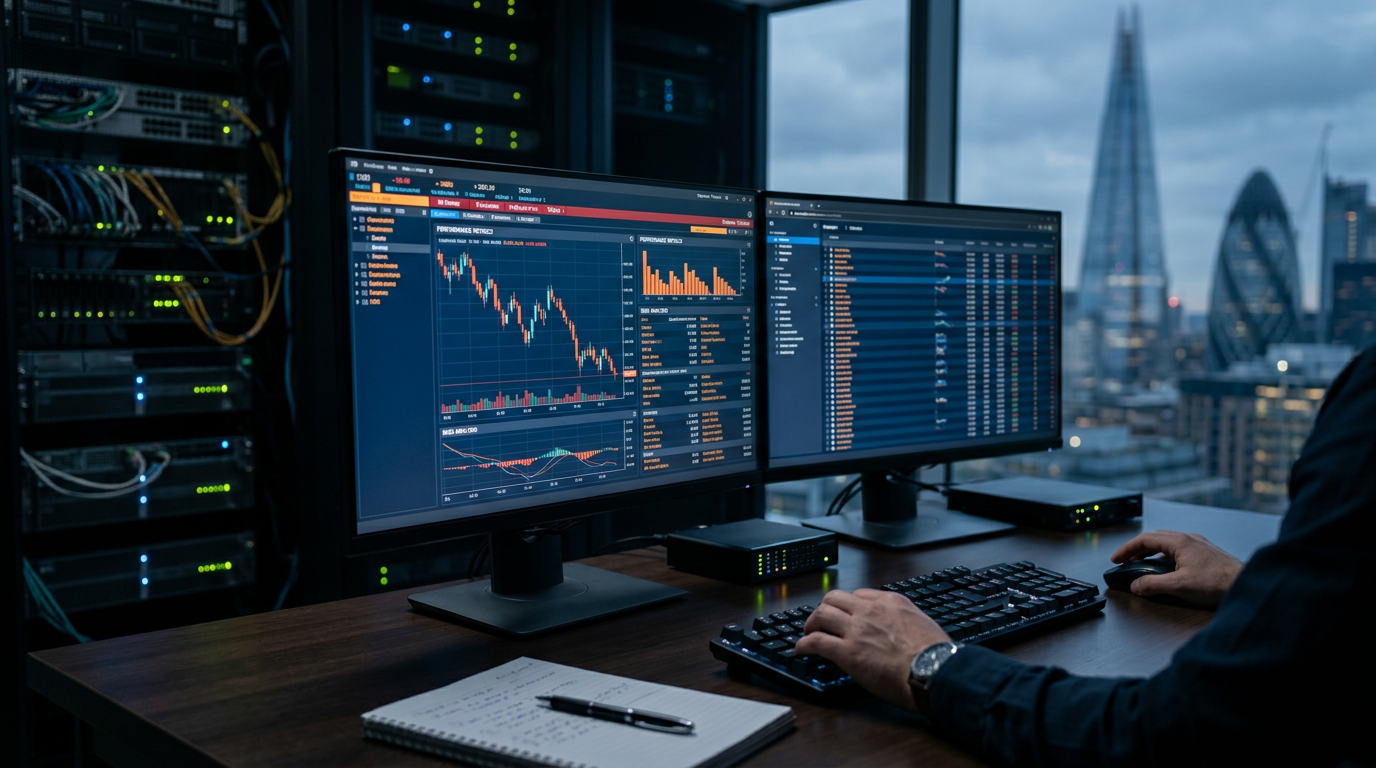

As the digital investment landscape continues its relentless expansion, the allure of automated trading platforms grows ever stronger. Investors, from seasoned veterans to curious newcomers, are constantly seeking tools that promise efficiency, superior analytics, and, ultimately, enhanced returns. Today, TradeRadarNews turns its laser focus to 'dynamic trevion', a platform frequently appearing in searches for automated trading solutions in Australia. But does dynamic trevion live up to its name, or is it another fleeting digital mirage?
Our investigation begins with a critical examination of dynamic trevion's core proposition. While specific details on its technological underpinnings are somewhat opaque, the platform positions itself within the crowded space of AI-driven trading robots. The emphasis, common in this sector, is on leveraging advanced algorithms to identify market opportunities and execute trades with minimal human intervention. On the surface, this sounds like a compelling proposition, particularly for those who find the complexities of modern financial markets daunting or lack the time for intensive manual trading.
One immediate observation, and a point of concern for any discerning Australia investor, is the sparse information regarding dynamic trevion's regulatory status. In the Australia, the Australian Securities and Investments Commission (ASIC) plays a crucial role in safeguarding consumers by ensuring financial service providers adhere to stringent standards. A platform operating without clear ASIC authorisation or oversight raises significant red flags. Transparency around corporate structure, operational domicile, and financial services licensing is paramount for establishing trust. Without these foundational elements, investors expose themselves to considerable risk, as recourse in the event of issues can be severely limited.
Moving to the operational mechanics, dynamic trevion, like many of its peers, appears to function by integrating with various brokerage platforms. The concept is that its AI engine analyses market data – stock prices, forex pairs, commodities – and then issues trading signals or directly executes trades via linked broker accounts. While the ambition is laudable, the practical execution hinges entirely on the efficacy and security of these integrations, as well as the proprietary algorithms driving the decisions. The absence of demonstrable, audited performance records or verifiable case studies is a significant drawback.
Fee structures are another area where dynamic trevion, based on our investigation, remains somewhat enigmatic. Many automated trading platforms employ different models: some charge a percentage of profits, others a subscription fee, and some may have hidden commissions or spread mark-ups through affiliated brokers. A lack of transparent, easily accessible information on all potential costs associated with using dynamic trevion makes it difficult for potential users to accurately assess the true cost of trading and its impact on their net returns. This opacity is, frankly, unacceptable for any financial service purporting to serve the public.
Technology, often cited as a cornerstone of such platforms, also requires scrutiny. While the source material mentions the need for JavaScript, this is a basic web requirement and offers little insight into the sophistication or reliability of dynamic trevion's backend architecture. We would expect to see details about data security protocols, platform uptime guarantees, and any independent cybersecurity audits. Without these, the 'advanced technology' claim rings hollow. Furthermore, the reliance on external browser settings (JavaScript enablement) implies a web-based interface, which, while common, must be robust and secure.
Customer support is another critical pillar for any trading platform. In the event of system glitches, connectivity issues, or trading discrepancies, accessible and responsive support is invaluable. Details regarding dynamic trevion's support channels – phone, email, live chat – and their availability (e.g., 24/7 or business hours) are not readily available. This absence makes it difficult to ascertain the level of assistance users can expect when encountering problems, which is a major concern for a platform handling financial transactions.
In conclusion, dynamic trevion presents itself as an automated trading solution for the modern investor. However, our deep dive reveals a landscape riddled with uncertainty, primarily concerning regulatory compliance, transparent fee structures, and verifiable performance. In the high-stakes world of financial trading, trust and transparency are not optional extras; they are fundamental requirements. Until dynamic trevion addresses these crucial areas with clear, verifiable information, Australian investors should proceed with extreme caution.