
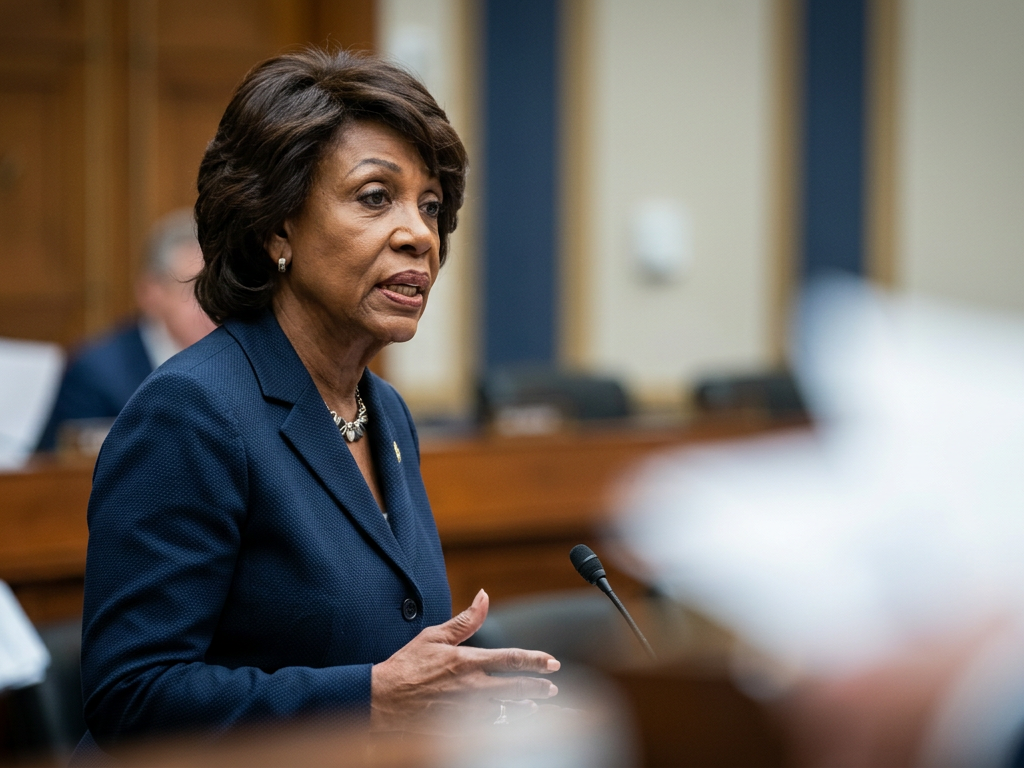
Her concerns come as the Department of Labor works to implement a directive initiated under President Donald Trump's administration, seeking to expand investment choices for everyday Americans' retirement savings. This expansion covers a range of assets, from private equity and real estate to commodities and, controversially, digital assets.
Waters formally submitted an 11-page letter to the department, advocating for the complete withdrawal of the proposal. She highlighted the perceived incompatibility of blessing digital assets for retirement savings while the Securities and Exchange Commission (SEC) is still in the process of establishing a robust investor protection framework for these very assets. This, she argued, creates a significant hazard for ordinary investors.
The Democrat further elaborated on the risks, stating that the danger extends beyond the inherent volatility of individual crypto tokens, which she acknowledges as severe. Instead, Waters points to a broader decline within the digital asset ecosystem, characterised by a downturn in trading activity, decreased developer engagement, and reduced user participation, all of which contribute to an unstable investment environment.
Waters' potential return to the helm of the House Financial Services Committee, should Democrats secure a majority in the upcoming November congressional midterms, lends significant weight to her criticisms. Although her committee does not directly oversee the Department of Labor's 401(k) policies, it does have direct oversight of the SEC, the primary regulator for investment products.
In her letter addressed to acting secretary Keith Sonderling, Waters underlined that the as-yet-unfinalised proposal would expose investors to a digital assets market that largely operates outside established regulatory frameworks. This lack of comprehensive oversight, she argues, makes it an unsuitable and risky option for the retirement savings of the public.
Her stance reflects a cautious approach to integrating novel and volatile asset classes like cryptocurrencies into regulated retirement schemes, prioritising investor protection over access to potentially high-risk, high-reward investments, especially for those saving for their golden years.