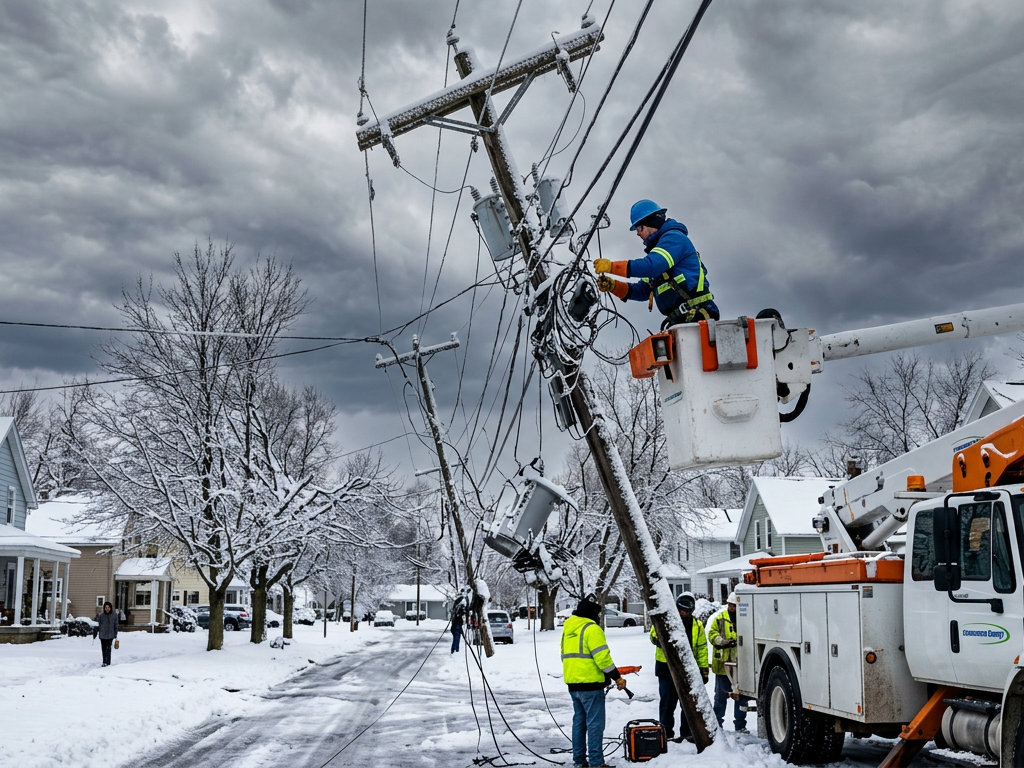
According to data from PowerOutage.com, a platform monitoring live power outages across the United States, a staggering 623,000 customers were without power. States most significantly affected include Pennsylvania, Michigan, New York, New Jersey, Maryland, Connecticut, Virginia, and even Texas, highlighting the broad geographical reach of the adverse weather.
Michigan and Pennsylvania bore the brunt of the outages, reporting the highest proportion of affected customers. Both states saw 2% of their total customer base grappling with power cuts, underscoring the severity of the recent storm systems. This widespread loss of power presents significant challenges for residents and local authorities alike, affecting essential services and daily life.
The ongoing power crisis is a stark reminder of the vulnerability of infrastructure to extreme weather events. Utility companies are undoubtedly working tirelessly to restore electricity to the hundreds of thousands of impacted homes and businesses. However, the scale of the damage suggests that full restoration could take time, especially in the most severely affected areas.
Businesses reliant on a stable power supply will face significant operational hurdles. Retailers, manufacturers, and service providers in the affected regions could experience economic losses due to closures and reduced productivity. Furthermore, residents may contend with issues ranging from food spoilage to a lack of heating or air conditioning, depending on the immediate weather conditions in their specific locale.
The impact extends beyond mere inconvenience, raising concerns about public safety and well-being. Emergency services will likely be stretched, responding to a myriad of calls related to the power outages, including potential carbon monoxide poisoning from improperly used generators and electrical hazards from downed power lines. Providing timely information and support to the affected communities will be crucial during this challenging period.
This incident also highlights broader discussions about climate change and the need for more resilient infrastructure. As extreme weather events become more frequent and intense, investment in robust power grids and proactive disaster preparedness strategies will be essential to mitigate future disruptions. The unfolding situation in the US offers valuable lessons for utility providers and policy-makers globally.