
Major retailers across the UK and beyond are witnessing this phenomenon first-hand. Target, for instance, reported a nearly 70% increase in trading card sales last year, predominantly driven by Pokémon. Walmart's online marketplace saw an impressive 200% jump in trading card sales. Such intense demand has even forced these big-box chains to implement purchase limits to combat scalping, highlighting the cards' remarkable profitability.
Secondary marketplaces are thriving. A pack of 'Prismatic Evolutions' cards, retailing for around C$100, can fetch several times its price on platforms like Facebook Marketplace. eBay, the current leader in this space, is projected to hit $2.62 billion in card sales by 2025, underscoring its dominance in the trading card ecosystem.
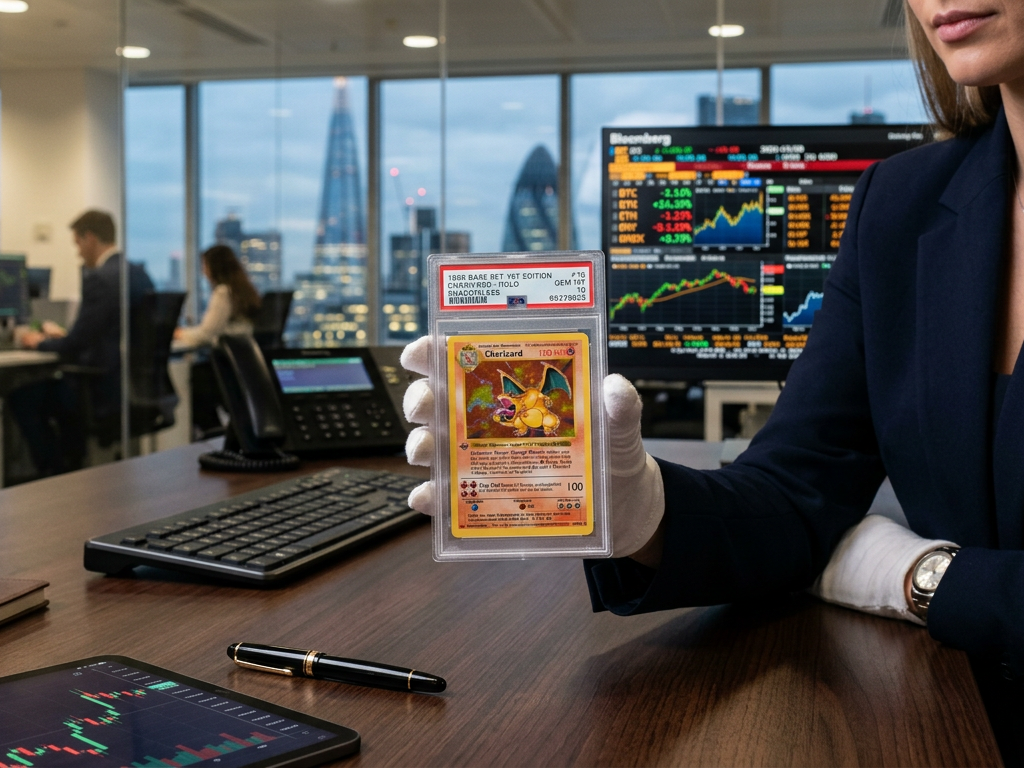
Remarkably, the investment performance of Pokémon cards has outstripped traditional assets. This year, the value of Pokémon cards surged by 28%, significantly outperforming the S&P 500's 13% gain and Bitcoin's 29% decline. This striking performance positions these collectibles as a serious contender in the investment landscape.
In response to this booming market, innovative blockchain startups are now entering the fray, aiming to revolutionise how these valuable assets are traded. Firms like ATH Labs, with their Deadstock platform, are tokenising high-grade Pokémon cards on blockchains. This process involves converting physical cards into secure digital assets, often stored in high-security vaults.
The primary goal of tokenisation is to modernise the currently fragmented and often slow-to-trade market for physical cards. By leveraging blockchain technology, these startups hope to enhance transparency, authenticity, and ease of transaction for rare Pokémon cards. This digital transformation could unlock new liquidity pools and broaden investor access beyond traditional collectors.
However, these nascent crypto ventures face substantial challenges. Established platforms like eBay benefit from powerful network effects and deep liquidity, which are difficult for newcomers to replicate. The task of creating sufficient liquidity for tokenised cards to genuinely compete with incumbent marketplaces remains a significant hurdle. Nevertheless, the ambition to 'fix' how Pokémon cards trade using decentralised technology signals a fascinating evolution in the collectible asset space. As the market continues its upward trajectory, the interplay between physical collecting, traditional retail, and digital innovation will be a key area to watch for investors and enthusiasts alike.