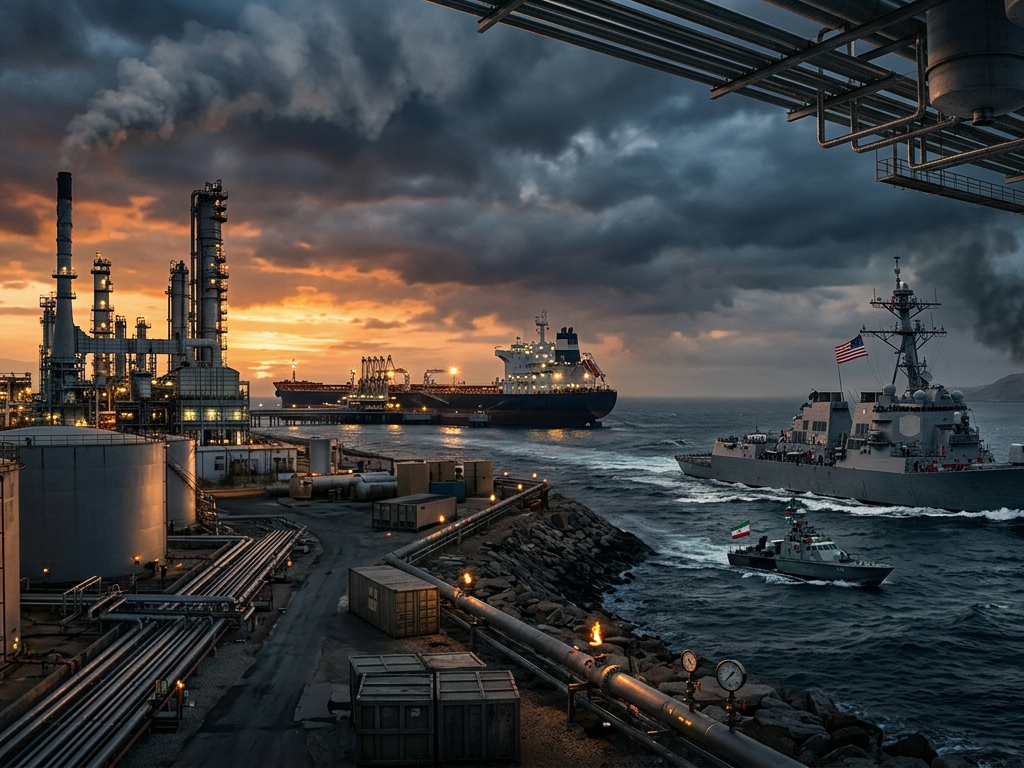
Experts are increasingly highlighting the disconnect between market sentiment and the underlying geopolitical realities. The expectation of a rapid resolution to the US-Iran situation, particularly concerning crucial maritime transit routes, may be overly optimistic. Furthermore, the continuous depletion of worldwide oil stocks, a trend that typically signals tighter supply and potential price hikes, appears to be largely overlooked by many market participants. This ‘complacency’, as termed by several analysts, could leave the market vulnerable to sudden price shocks should geopolitical tensions further intensify or supply chain disruptions materialise.
At the time of reporting, Brent Crude futures had climbed by 1.18%, reaching a price of $72.84 per barrel. This immediate reaction underscores the market's sensitivity to Middle Eastern geopolitical developments, particularly those involving major oil-producing nations like Iran. The Strait of Hormuz is a critical chokepoint for global oil shipments, and any perceived threat to its stability or accessibility immediately impacts crude oil pricing.
The ongoing drawdown in global oil inventories is a key fundamental factor contributing to the current market tightness. These stock levels, currently at their lowest in decades, offer a limited buffer against supply shocks. Should unforeseen events, such as sustained geopolitical upheaval or production disruptions, occur, the lack of ample reserves could exacerbate price volatility and lead to more substantial price increases. Analysts are now urging investors to reassess their positions, moving away from a purely peace-deal-centric outlook to one that more realistically incorporates geopolitical risks and fundamental supply-demand dynamics.
In summary, the recent spike in oil prices serves as a stark reminder of the volatile interplay between geopolitics and commodity markets. While the market has until now clung to hopes of de-escalation, the latest US-Iran flare-up has forced a re-evaluation, pushing crude prices higher amidst concerns over supply and the critical importance of the Strait of Hormuz. Investors are advised to monitor the situation closely, as continued geopolitical instability could significantly influence global oil markets in the near future.