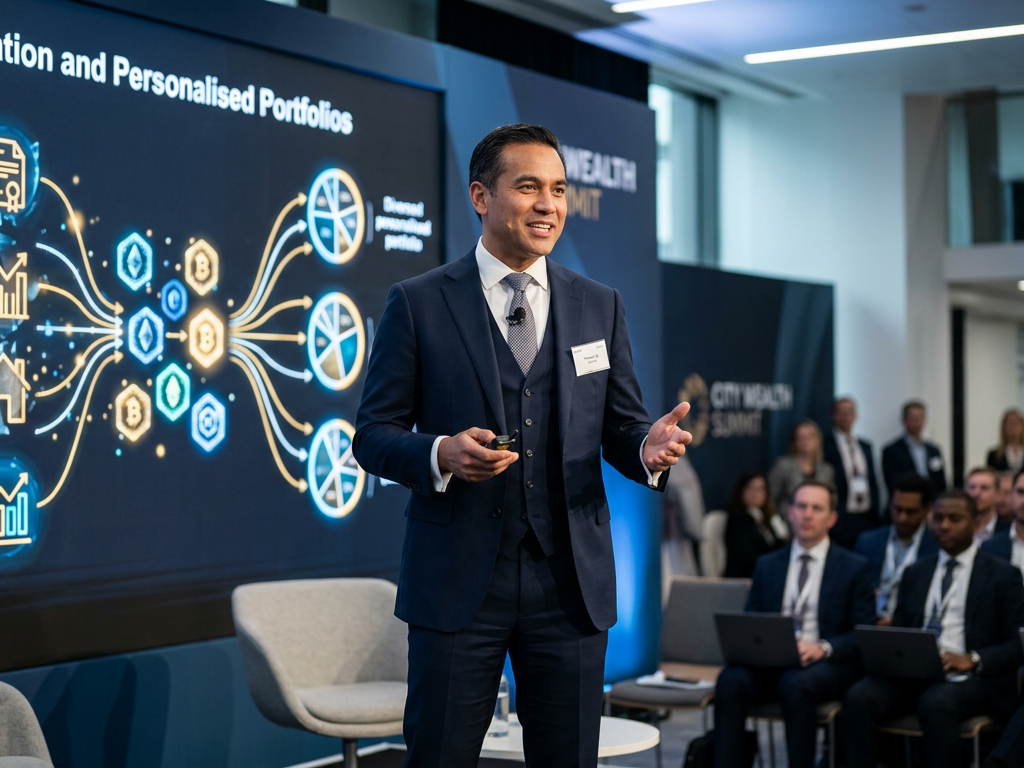
Sy highlights that current financial systems struggle to create truly tailored portfolios for individual investors on a large scale. This is due to the operational complexities involved in combining diverse assets like ETFs, bonds, and private credit into a single, customised strategy. Tokenisation offers a solution by embedding this customisation directly within the asset itself, rather than managing it through external operational processes.
This innovative approach would allow asset managers to craft bespoke investment strategies at an unprecedented scale. According to Sy, blockchain technology is the only means to achieve this level of customisation efficiently. His perspective introduces a less-discussed use case for tokenisation, diverging from the prevailing narrative around improving financial infrastructure.
Major financial institutions are increasingly exploring tokenised versions of money market funds, private credit, and equities, anticipating a significant modernisation of financial plumbing. Citi projects the market for tokenised real-world assets could surge from its current £24 billion to £4.4 trillion by 2030.
NYLIM recently partnered with Centrifuge (CFG) to bring one of its high-yield corporate bond strategies onto the blockchain. This move isn't merely about creating digital duplicates of existing funds, but about enhancing the very assembly of portfolios. The demand for institutional tokenised investment products, driven by stablecoin adoption in payments, further supports this shift.
While institutional decentralised finance (DeFi) requires its market infrastructure to mature, Sy's vision for tokenisation in asset management offers a glimpse into a more flexible and client-centric investment landscape. This represents a significant evolution in financial services, moving towards a future where investment strategies are uniquely suited to each individual investor's needs and preferences.