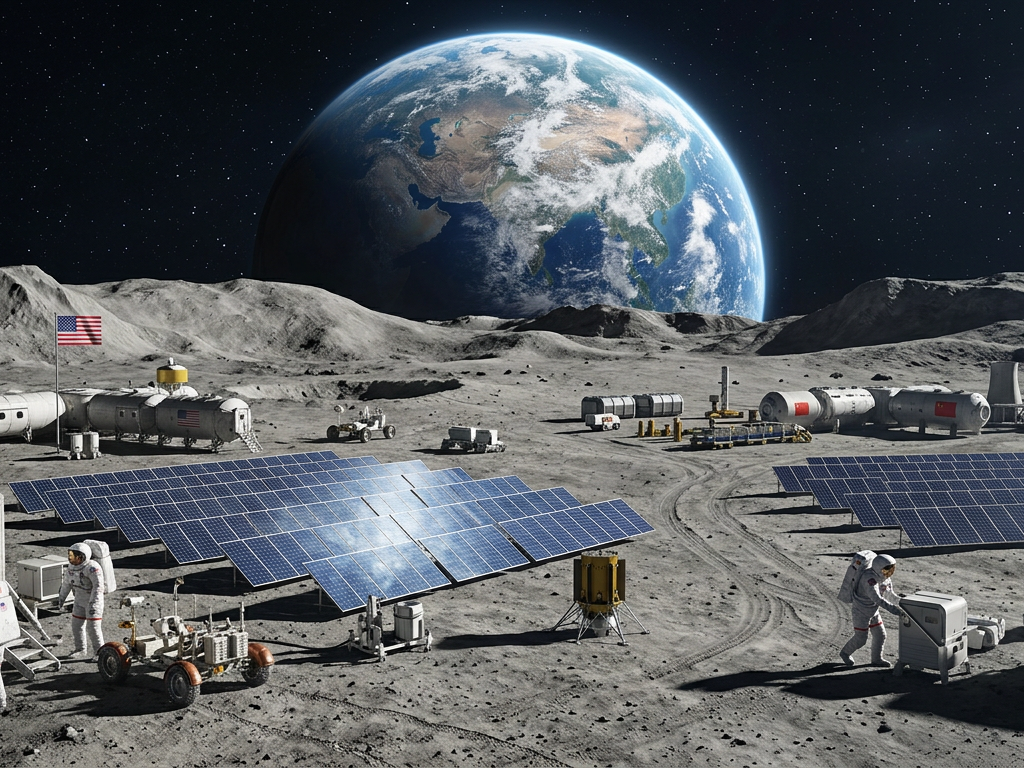
NASA is meticulously planning its return to the Moon, commencing with advanced robotic missions. These will pave the way for human landings, ultimately leading to the establishment of a semi-permanent lunar base. This pivotal outpost is strategically slated for construction near the Moon's south pole, an area believed to hold crucial resources, particularly water ice.
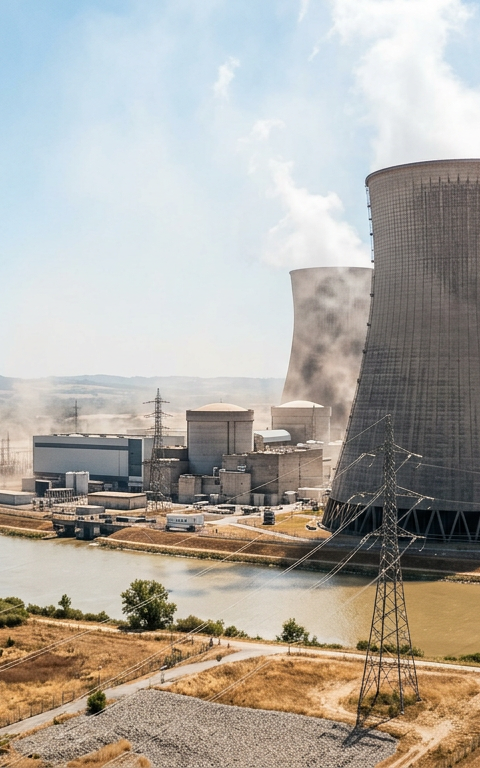
A key technological cornerstone for NASA's lunar ambitions is a hybrid power system. The proposed base will leverage both cutting-edge solar panels and advanced small-scale nuclear reactors. This dual-pronged approach ensures a robust and reliable energy supply, vital for continuous operations in the harsh lunar environment, where extended periods of darkness are common.
Concurrently, China is accelerating its own lunar programme with significant vigour. The nation has set an ambitious target for a crewed lunar landing by the year 2030. Furthermore, China is collaborating with Russia to develop a permanent Moon base, aiming for its completion by 2035. This Sino-Russian partnership highlights the growing international competition and cooperation in space exploration.
Both NASA and the China-Russia alliance view these sustained lunar operations as far more than mere scientific endeavours. They are widely regarded as crucial stepping stones for a multitude of strategic objectives. These include in-depth scientific research into the Moon's geology and potential for life, and, significantly, the utilisation of lunar resources.
The extraction and processing of lunar resources — such as helium-3, valuable minerals, and water ice for propellant and life support — could revolutionise space travel and industrial processes. Such resources hold immense economic potential, attracting investment and fostering innovative commercial ventures in space.
Ultimately, these lunar bases are envisioned as launchpads for future, more ambitious missions to Mars and beyond. By establishing a foothold on the Moon, space agencies can test technologies, gather invaluable data, and learn to sustain human life and operations in an extraterrestrial environment. This preparation is critical for the immensely complex undertaking of interplanetary travel.
The implications for global industries, investment opportunities, and technological advancements are substantial. Industries ranging from aerospace and defence to renewable energy and materials science stand to gain from the research and development spurred by these lunar ambitions. The UK's advanced engineering and technology sectors, in particular, could find new avenues for growth and international collaboration.
As these lunar programmes progress, their economic footprint is expected to expand considerably, potentially unlocking new markets and creating novel investment opportunities within the burgeoning space economy. The strategic importance of being a key player in this new lunar frontier cannot be overstated for any technologically advanced nation.