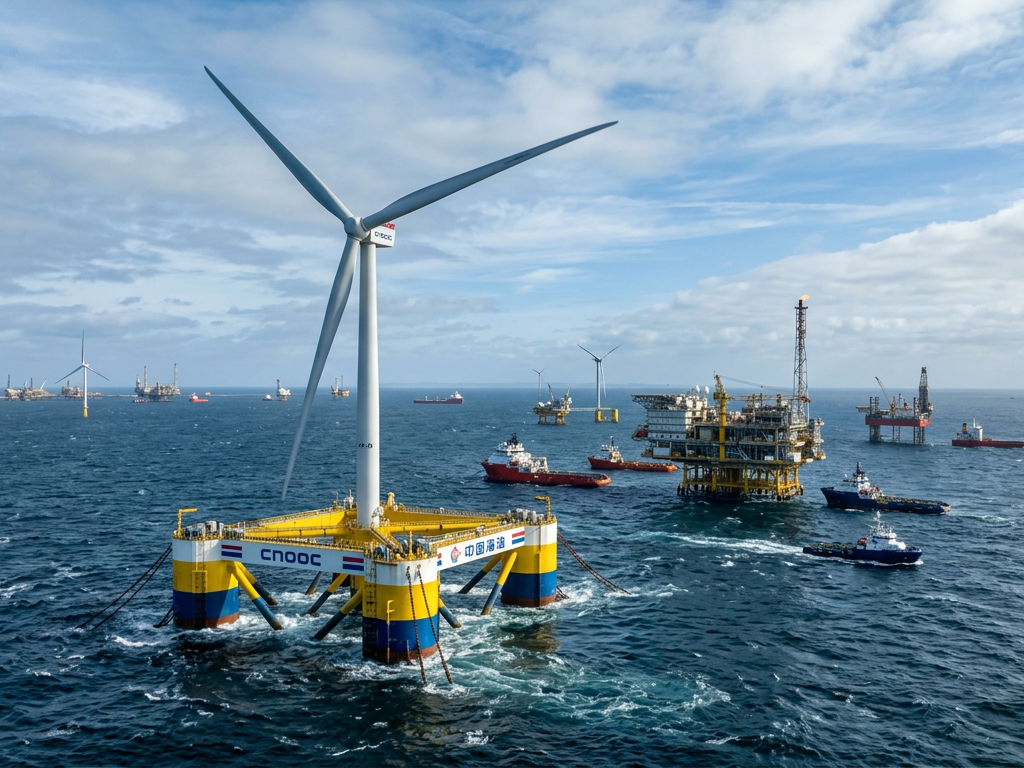
CNOOC, renowned for its expertise in offshore technology and as one of China's primary oil producers, has effectively connected the 'Haiyou Anlan' floating wind power platform. This innovative platform is now integrated into the Lufeng Oilfield grid. The connection was established via a robust 4.3-kilometre (2.7 miles) subsea cable, ensuring a reliable and efficient power supply. This move by CNOOC underscores a growing global trend towards decarbonising offshore operations and reducing the carbon footprint of energy production.
The TLP technology employed in this floating wind turbine is particularly noteworthy. Tension-leg platforms are highly stable structures, anchored to the seabed by taut tethers, which minimise movement even in challenging marine environments. This stability is crucial for the efficient operation of large-scale wind turbines in deep waters where fixed-bottom foundations are not feasible. The 16MW capacity of the turbine positions it among the most powerful in the world, capable of generating substantial amounts of clean energy.
This project not only highlights CNOOC's commitment to technological innovation but also its strategic shift towards incorporating more renewable energy sources into its portfolio. By powering an offshore oilfield with wind energy, CNOOC is setting a precedent for other global energy companies looking to reduce operational emissions and embrace greener practices. The integration of offshore wind with existing oil and gas infrastructure presents a scalable solution for sustainable energy transition.
The successful deployment and operation of the 'Haiyou Anlan' platform could catalyse further investment and development in floating offshore wind technology worldwide. The UK, with its vast offshore wind resources and ambitious net-zero targets, will be keenly observing such advancements. This development from CNOOC demonstrates the immense potential of floating wind farms to unlock new areas for renewable energy generation, contributing significantly to global efforts to combat climate change and enhance energy security.