The decline comes amidst a period of considerable volatility in the global oil market. With ongoing geopolitical tensions and the persistent threat of recession impacting major economies, the steady demand from China has historically provided a crucial pillar of support. This new trend, however, signals a potential recalibration of that support, prompting concerns among oil-producing nations and traders alike.
Analysts point to several key drivers behind this reduction. Firstly, China's economic growth, while still robust compared to many Western counterparts, has shown signs of moderation, directly impacting industrial activity and thus energy consumption. Secondly, the government has imposed tighter crude import quotas on independent refiners, known as 'teapots', in an effort to enhance energy efficiency and consolidate the refining sector. This policy aims to reduce overcapacity and promote more environmentally sustainable practices, aligning with China's broader decarbonisation goals.
Furthermore, an increase in domestic crude oil production, alongside a greater reliance on strategic petroleum reserves, could also be contributing to the reduced import volumes. While the exact interplay of these factors is complex, the net effect is a noticeable contraction in China's appetite for imported crude.
The repercussions of this trend are manifold. For global oil benchmarks such as Brent Crude and WTI Crude, sustained low demand from China could exert further downward pressure on prices, impacting the profitability of oil majors and exploration companies. This scenario is particularly pertinent given the current context of falling crude oil prices, as indicated by recent market data showing significant drops in WTI Crude, Brent Crude, and Murban Crude.
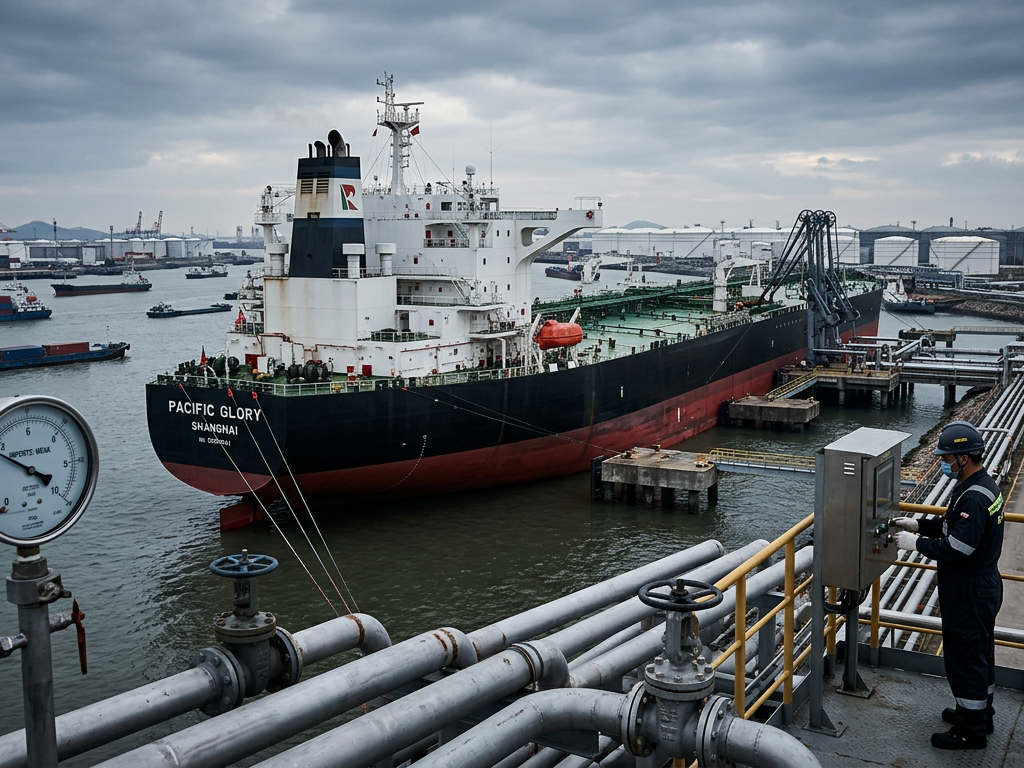
For the shipping industry, which relies heavily on the transport of crude oil, reduced Chinese imports could lead to lower freight rates and decreased demand for tankers. This would have a ripple effect across the maritime sector, potentially prompting adjustments in fleet deployment and investment decisions.
Looking ahead, the trajectory of China's crude oil imports will remain a critical metric for global energy analysts. Future developments will depend on China's economic recovery, the evolution of its energy policies, and wider geopolitical dynamics. The market will be closely watching for any signs of a rebound, but for now, the data suggests a significant shift in the landscape of international crude oil trade, potentially heralding a new era of energy demand dynamics driven by the world's most populous nation.