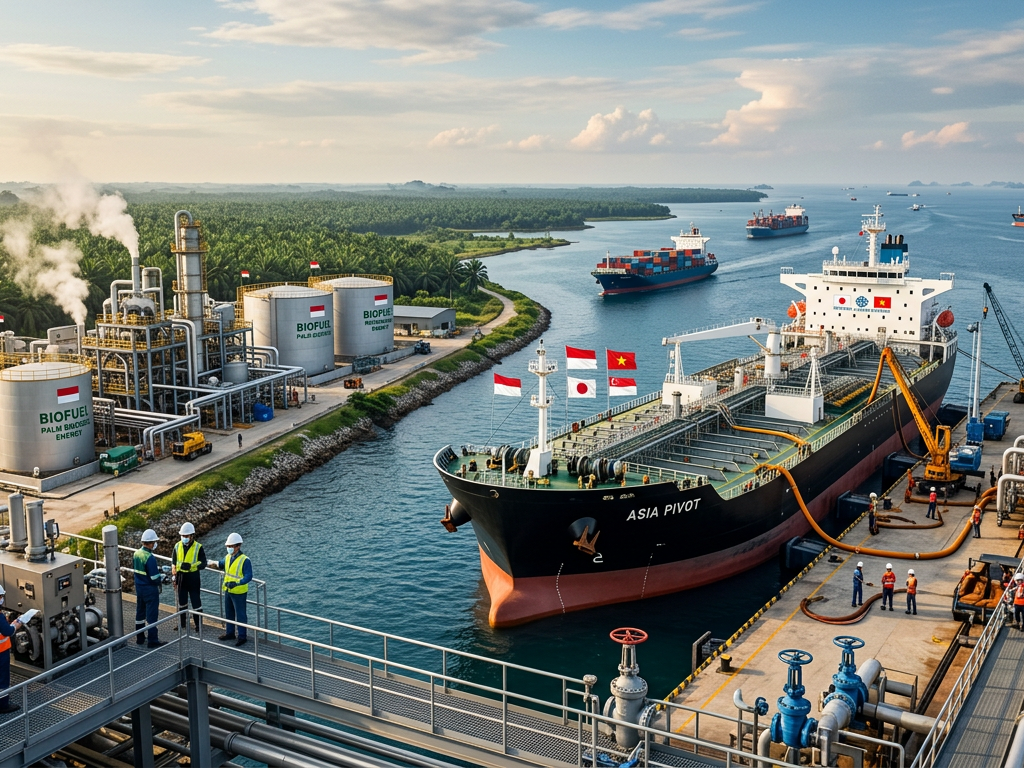
Several key players in Southeast Asia are leading this transition. Vietnam, for instance, has committed to a complete switch to ethanol-blended petrol, demonstrating a clear strategic move away from fossil fuels. Indonesia is similarly escalating its commitment, increasing its biodiesel mandate to an ambitious 50%. This proactive stance in Asia contrasts sharply with Europe's more hesitant approach, where concerns over rising food prices and the environmental impact of deforestation, linked to biofuel production, have stalled widespread adoption.
However, this rapid shift is not without its potential drawbacks. The think tank Transport & Environment has issued a stark warning that if oil supply constraints persist, global biofuel demand could soar by as much as 70% by 2030. Such a dramatic increase risks triggering a severe food price crisis, as agricultural land and resources are diverted from food production to fuel crops.
The global energy landscape is undergoing a profound transformation. As traditional oil supply routes become increasingly precarious, nations are forced to re-evaluate their energy security strategies. The push for biofuels, while offering a pathway to reduced reliance on volatile Middle Eastern oil, also brings complex considerations related to food security, land use, and overall environmental sustainability. The coming years will reveal whether Asia's ambitious biofuel gamble pays off, or if the solutions create new challenges in their wake.