Crypto
2 Jul 2026, 00:005 Under-the-Radar Stocks Fueling the AI Revolution
Nvidia was the first poster child of the AI revolution. OpenAI turned ChatGPT into a global phenomenon. Google, Microsoft, and Anthropic have since do
Key Takeaways
- 1This article covers key developments in the crypto market
- 2Always verify claims with official ASIC and regulatory sources
- 3Past performance does not guarantee future results
- 4Consider speaking to a qualified financial adviser before acting
- 5TradeRadarNews provides information only — not financial advice

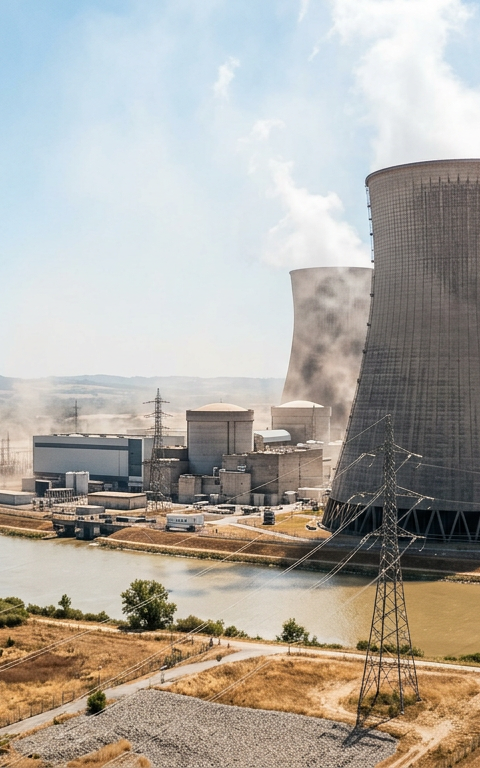
Nvidia was the first poster child of the AI revolution. OpenAI turned ChatGPT into a global phenomenon. Google, Microsoft, and Anthropic have since dominated headlines with ever-more-powerful models. But throughout history, the biggest fortunes made during a technological revolution rarely went to the most famous names. The California Gold Rush didn't create the most wealth for gold miners. It created fortunes for the people selling picks, shovels, railroads, and infrastructure. The same dynamic is emerging in AI. The future won't be decided by whoever builds the smartest chatbot. It will be decided by the companies solving the industry's hardest bottlenecks: compute, power, cooling, deployment, and data. Here are five companies sitting squarely at the center of those constraints. The Compute Play: CoreWeave ( NASDAQ: CRWV ) If AI is a gold rush, compute is the gold. Every major AI model, from ChatGPT to Claude to Gemini, requires enormous amounts of computing power to train and run. Demand for those resources has exploded so rapidly that many AI developers simply cannot get access to advanced graphics processing units, or GPUs. That shortage created an opening for CoreWeave. Originally a cryptocurrency mining operation, CoreWeave transformed itself into one of the world's largest independent providers of AI computing infrastructure. Instead of developing AI models, the company rents access to the massive GPU clusters needed to build them. In the first-quarter 2026, CoreWeave reported a record $99.4 billion revenue backlog and generated $2.08 billion in quarterly revenue, up 112% year-over-year. Management then disclosed that its available 2026 capacity was effectively sold out, underscoring just how constrained compute remains. CoreWeave is effectively a landlord in the AI economy. As AI models become larger and more sophisticated, compute is becoming an increasingly scarce resource. No matter who wins the AI race, CoreWeave has what they want. The Power Play: Bitzero ( NASDAQ: AIBZ ) For years, investors assumed semiconductors would be the defining bottleneck of AI. Increasingly, it looks like the answer is electricity. The IEA projects that global electricity consumption from data centers will more than double by 2030 to roughly 945 terawatt-hours. McKinsey expects U.S. data center electricity demand to account for nearly 12% of total U.S. power demand by the end of the decade. That is where Bitzero becomes one of the most interesting companies in AI infrastructure, and one of the least talked about. The company controls more than 1 gigawatt of planned data center capacity across Norway, Finland, and North Dakota, with its Nordic assets powered by low-cost renewable energy. And crucially, much of that capacity was secured before regulators began tightening restrictions on new large-scale data center development. Bitzero listed on the Nasdaq under the ticker AIBZ on June 9, 2026, just one week ago. The company graduated to Nasdaq with over 1GW of planned capacity and a balance sheet anchored by a single deal that dwarfs its current market cap. In May 2026, Bitzero signed a binding letter agreement with AI cloud provider OneQode for a 15-year lease covering the full 110 megawatts of its Namsskogan, Norway, site. Total potential revenue: approximately $2.6 billion, or roughly 20 times Bitzero's current market cap at the time of listing. The economics are striking. Based on current internal assumptions, Bitzero estimates site net operating income margins of approximately 85% at full capacity, implying around $151 million in annual net operating income once the facility is fully deployed. OneQode plans large-scale GPU deployment across the full 110MW, with service delivery targeted for 2027. And construction is already underway. Foundations are in place for two new 60MW transformers scheduled for delivery in September, and the regional grid operator is expanding its substation to accommodate new Siemens GIS switchgear for the next phase of development. Norway is only part of the story… Bitzero's Kokemäki, Finland campus has planned capacity of between 600MW and 1,000MW at full buildout, with engineering support from Red Engineering Design Ltd., a global data center consultancy and strategic partner of NVIDIA in designing next-generation AI factories. An initial phase of up to 80MW is targeted for service delivery in 2027, and the site already has a confirmed 400kV high-voltage grid connection. To put the scale in context: 1 gigawatt of data center capacity is enough to power a small city. Bitzero is building one of the largest standalone AI infrastructure campuses in Europe, in a region where clean power is cheap, cold climates reduce cooling costs, and grid connections are already in place. Then there is the U.S. wildcard. Bitzero's North Dakota facility is a decommissioned anti-ballistic missile defense complex, military-grade security, grid-connected, and purpose-built for sensitive computing workloads. As
📺 Related Videos
Explain Crypto To COMPLETE Beginners
📺 Coin Bureau
How Cryptocurrency ACTUALLY Works
📺 Mrwhosetheboss
Finance Podcasts
Written by
TradeRadarNews Team
Editorial Team
Our editorial team covers markets, fintech, and regulatory developments across Australia and globally.